# The Hadith That Changed How I Think About Earning While I Sleep
There's a specific narration that stuck in my head for months after I first read it. Not because it was dramatic or about the Day of Judgment, but because it was about a garden.
The Prophet (peace be upon him) said: "There is no Muslim who plants a tree or sows seeds, and then a bird, or a person or an animal eats from it, except that it is regarded as a charity for him." (Sahih al Bukhari 2320)
I must have read that hadith a dozen times before it actually hit me. The man plants once. And then the reward keeps coming. The bird eats while he sleeps. The traveler picks fruit while the farmer is miles away at the market. The animal grazes and the planter gets credited for something he didn't even witness.
That's passive income. Not in the Silicon Valley sense. In the most literal, prophetic, agricultural sense. You put something good into the ground, you tend to it, and then it produces without you standing over it every second.
And it made me wonder: why do so many of us feel guilty about the idea of earning money while we're not actively working?
The Guilt Problem
I spent a weird amount of time feeling uncomfortable with the concept of passive income. Part of it was cultural. I grew up around people who equated virtue with visible effort. If you weren't tired at the end of the day, you must not have worked hard enough. And if money was coming in without you grinding, something felt off about it.
But the Sunnah doesn't support that framework at all. The Prophet (peace be upon him) engaged in trade. His companions owned land that generated ongoing produce. Umar ibn al Khattab (may Allah be pleased with him) famously had land in Khaybar that he asked the Prophet about, and was told to keep its origin intact and give its fruits in charity. That's an endowment. That's an asset producing yield.
The issue was never earning without being physically present. The issue was always how you earn and what the underlying asset or activity involves.
What the Sunnah Actually Models
When you look at the prophetic model of wealth, a few patterns emerge that map directly onto modern passive income thinking.
First, ownership of productive assets. Land, livestock, orchards. These are things that produce value over time without requiring the owner to be personally involved every hour.
Second, partnership structures. Mudarabah, where one party provides capital and the other provides labor, was practiced during the Prophet's time and before. Khadijah (may Allah be pleased with her) financed trade caravans. She wasn't on the caravan. She funded the operation and shared in the profit. That is a form of passive income by any definition.
Third, endowments (waqf). Setting aside a productive asset whose returns go to a specific purpose. The capital is preserved. The income flows.
None of this is controversial. But somehow when we translate it to a modern brokerage account, people freeze.
The $400 a Month Question
Here's what actually made me move. I ran the numbers on what $400 a month into SPUS (the SP Funds S&P 500 Sharia Industry Exclusions ETF) would look like over time. SPUS tracks a Shariah compliant version of the S&P 500, screening out companies involved in alcohol, gambling, conventional financial services, and other prohibited industries.
If someone had invested $400 per month into SPUS starting in January 2021 through the end of 2024, that's roughly $19,200 in contributions over four years. Now, the actual returns fluctuated because 2022 was rough for equities broadly, but the principle still held: consistent contributions into a diversified, screened equity fund is one of the most accessible forms of halal passive wealth building available today.
The fund's expense ratio is 0.49%. On a $19,200 portfolio, that's about $94 a year in fees. Not nothing, but not outrageous. Compare that to HLAL (Wahed FTSE USA Shariah ETF), which carries a 0.50% expense ratio, and you're in similar territory. UMMA (Wahed Dow Jones Islamic World ETF) is also at 0.50%.
These are not dramatic differences. But over 20 years with compounding, even 0.10% adds up to thousands of dollars. I spent an embarrassing amount of time on a compound interest calculator one Saturday morning realizing this.
The Piece Most People Skip
Everyone talks about which halal ETF to buy. Almost nobody talks about the reinvestment mechanism.
When SPUS pays a distribution, what happens to it? If you have dividend reinvestment (DRIP) turned on in your brokerage account, those distributions automatically purchase more shares. That's your tree bearing fruit that plants more trees.
But here's the thing most Muslims don't think through: those distributions need to be purified. Shariah compliant ETFs do their best to screen holdings, but there's typically a small percentage of impermissible income that slips through. SPUS and HLAL both publish purification percentages. For SPUS, this has historically been a small single digit percentage that you'd need to give away in charity.
So if your total distributions for the year were $320, and the purification ratio was, say, 2.5%, you'd need to donate $8 in charity. That's it. But I've met people who avoided halal investing entirely because they heard the word "purification" and assumed the whole thing was suspect. It's not. It's a built in mechanism to keep your earnings clean. The scholars who structured these funds thought about this.
Rental Income and the SPRE Question
SPRE (SP Funds S&P Global REIT Sharia ETF) is worth mentioning here because real estate income is another area the Sunnah clearly supports. Owning property and collecting rent is one of the oldest forms of passive income in human history. But not everyone can buy a rental property. The down payment alone puts it out of reach for many.
SPRE gives you fractional exposure to Shariah compliant real estate investment trusts. You're not a landlord. You're not fixing toilets at 2am. But you are participating in the income stream that real estate generates, filtered through a Shariah screen.
I don't think SPRE is a perfect product. Its liquidity and the relatively small fund size make me cautious. But as a concept, it's exactly what the Sunnah models: own a piece of something productive, let it generate, purify the small portion that needs purifying, and let the rest work.
The Ayah That Frames Everything
Allah says in Surah Al Baqarah, verse 261: "The example of those who spend their wealth in the way of Allah is like a seed of grain that grows seven ears; in each ear is a hundred grains. And Allah multiplies His reward for whom He wills."
That multiplication principle isn't just about charity. It's about how Allah designed growth to work. A single seed doesn't produce a single grain. It produces seven hundred. And compounding in a halal investment account works on a similar logic. Small, consistent inputs, given time and patience, grow disproportionately.
The problem is that most of us want the seven hundred grains by next Thursday.
What I Actually Did
I automated $400 a month into SPUS through my Fidelity brokerage account. I turned on DRIP. I set a calendar reminder every March to check the purification ratio from the fund's annual report and calculate what I owe in charity. I set another reminder to review my zakah obligation on the portfolio's value at my zakah anniversary date.
That's it. The whole system takes me maybe two hours a year to maintain. The rest of the time, it just grows. Like a tree someone planted that feeds birds he'll never see.
The Morning It Clicked
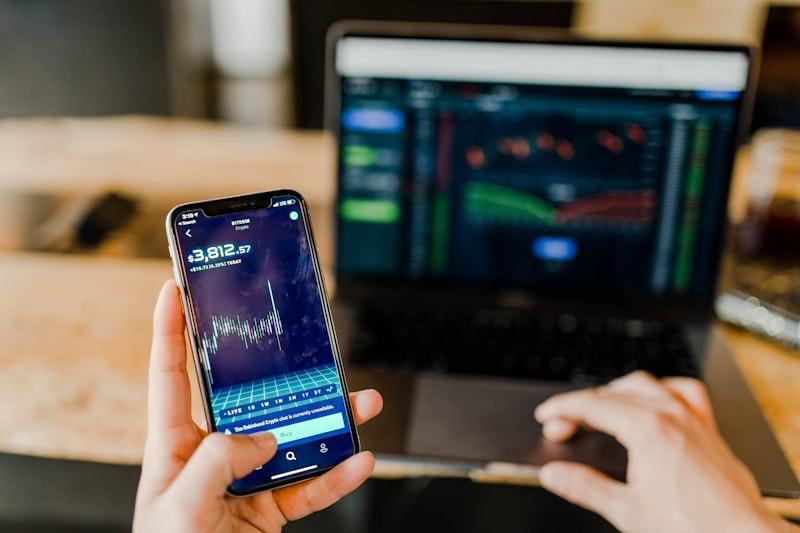
I was praying Fajr one morning, still groggy, and after I finished my adhkar I checked my portfolio on my phone. Not a great habit, I know. But the number had crossed a milestone I'd been watching for months. And I realized: while I had been sleeping, while I had been praying, while my daughter had been waking me up at odd hours, this small piece of my financial life had been quietly compounding.
I thought about that farmer in the hadith. He's not standing in the field watching the bird eat. He's somewhere else entirely, living his life, and the goodness of what he planted just keeps going.
I put my phone down and made dua that the money would stay clean and be a source of benefit. Then I went to make coffee.
I am not a certified financial advisor. Nothing in this article constitutes financial advice. Please consult a qualified Islamic finance advisor and do your own due diligence before making investment decisions.
Continue Your Journey
Explore more on SeekIslam: read your Daily Athkar to protect and ground yourself, use our Halal Finance Tools to invest with confidence, or browse All Articles for more reflections and guidance.

Share Your Reflection
Be the first to share a reflection on this article.