Allah called Ibrahim AS "Khalilullah." His intimate friend. Khalil is not just "friend." It is deeper than that. The Arabic root means someone whose love has penetrated to the innermost core, the way water seeps into the earth until it reaches the deepest layer.
No other human being in history received this title. Not Musa AS, who spoke directly to Allah. Not Muhammad ﷺ, who ascended to the heavens. Ibrahim AS alone was called Khalilullah.
To understand why, you have to understand what he was willing to let go of.
Test One: The Fire
Ibrahim AS grew up in a society that worshipped idols. His own father carved them. As a young man, he challenged his entire community with a question they could not answer: "Do you worship that which you yourselves carve, while Allah created you and what you make?" (As Saffat 37:95 to 96)
He did not stop at words. He smashed their idols, leaving only the largest one standing. When they asked who did this, he said: "Ask the big one, if they can speak." The logic was devastating. If these statues cannot even defend themselves, how can they protect you?
The king Nimrod ordered him thrown into a fire. The narrations describe a fire so enormous that they had to build a catapult to launch him into it because no one could get close enough. Birds flying overhead fell dead from the heat.
As Ibrahim AS was being launched toward the flames, Jibreel AS appeared and asked: "Do you need anything?"
Ibrahim AS said: "Not from you."
He turned to Allah alone. And Allah commanded the fire: "O fire, be cool and safe for Ibrahim." (Al Anbiya 21:69)
He sat in that fire, and it became a garden. The scholars say this was the first great test: would Ibrahim AS trust Allah with his own life?
He did. And Allah rewarded that trust with a miracle.
Test Two: Leaving His Son in the Desert
Years later, Ibrahim AS received a command that tested something deeper than his own survival. It tested his love.
Allah told him to take his wife Hajar and their infant son Ismail to a barren, waterless valley in the middle of the Arabian desert, what would one day become Makkah, and leave them there.
No explanation. No promise of how they would survive. No timeline for when he would return. Just: leave them.
Ibrahim AS obeyed. He walked away.
Hajar ran after him. "Ibrahim, where are you going? Are you leaving us in this valley where there is no person and no thing?"
He did not answer. He kept walking.
She asked again and again. He did not turn around.
Finally she asked the question that changed everything: "Did Allah command you to do this?"
He stopped. He said yes.
And she said: "Then He will not abandon us."
That sentence, spoken by a woman alone in a desert with a crying infant, is one of the most powerful declarations of tawakkul in all of human history.
What happened next? Hajar ran between the hills of Safa and Marwa seven times, searching for water, searching for any sign of life. She ran while her baby cried. She ran while her own thirst burned.
And then Ismail's tiny foot struck the ground, and water burst forth. Zamzam. A spring that has not stopped flowing in over 4,000 years.
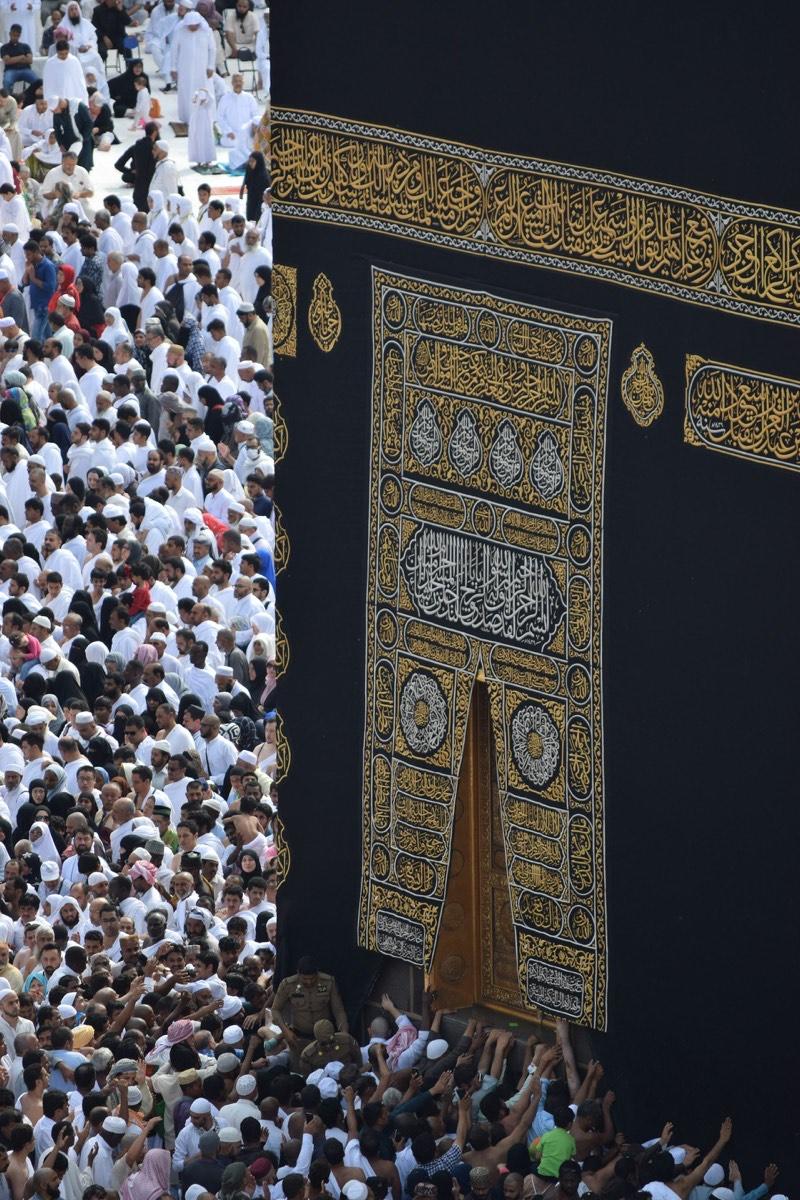
From that valley came a settlement. From that settlement came Makkah. From Makkah came the Ka'bah. From the Ka'bah came the direction the entire ummah faces in prayer, five times a day, until the end of time.
Every time a pilgrim runs between Safa and Marwa during Hajj, they are honoring a mother's trust in Allah. Every drop of Zamzam water is a testimony that Allah does not abandon those who rely on Him.
Test Three: The Sacrifice
The final test. The one that defines Ibrahim AS forever.
After years of separation, Ibrahim AS was reunited with his son Ismail. The boy had grown into a young man. They were finally together.
Then Ibrahim AS saw in a dream that he was sacrificing his son.
The dreams of prophets are revelation. This was not a nightmare. It was a command.
Ibrahim AS told Ismail. And Ismail, who had inherited his father's faith, who had been raised by a mother who trusted Allah in the desert, said: "O my father, do what you are commanded. You will find me, if Allah wills, among the patient." (As Saffat 37:102)
Father and son walked together to the place of sacrifice. Shaytan appeared three times, trying to dissuade them. Ibrahim AS threw stones at him each time. This is what we commemorate when we stone the Jamarat during Hajj.
Ibrahim AS laid his son down. He placed the knife against his throat. He was about to do it.
Allah called out: "O Ibrahim, you have fulfilled the vision. Indeed, We thus reward the doers of good." (As Saffat 37:104 to 105)
A ram appeared for the sacrifice. Ismail was spared.
Allah did not want Ismail's life. He wanted Ibrahim's heart. He wanted to know: is there anything you love more than Me?
The answer was no. And that is why Ibrahim AS is Khalilullah.
What This Means for You
Ibrahim AS teaches us that closeness to Allah is not measured by how comfortable your life is. It is measured by how completely you surrender in the moments when everything in you wants to hold on.
The thing you love most, your child, your business, your dream, your relationship, your comfort, may be exactly what Allah asks you to release.
Not to punish you. But to free you. To show you that your true attachment is to Him, not to the gift.
Most of us will never be asked to sacrifice a child. But we are asked to sacrifice smaller things every day. The job that pays well but involves haram. The relationship that feels good but pulls us from our deen. The comfort that keeps us stagnant when Allah is calling us to grow.
Every sacrifice has a Zamzam on the other side. Every act of letting go opens a door you could not have imagined.
Ibrahim AS let go of his safety in the fire. Allah turned it into a garden.
He let go of his family in the desert. Allah turned it into the holiest city on earth.
He let go of his son on the altar. Allah turned it into a legacy that the entire ummah honors every single year.
What are you holding onto that Allah is asking you to release?
"And whoever relies upon Allah, then He is sufficient for him." (At Talaq 65:3)
Share Your Reflection
Be the first to share a reflection on this article.