# The House Was Still Dark and I Was Already Losing
There was a morning, maybe six months ago, where I woke up before Fajr and just sat on the edge of my bed. Not to pray yet. Not because I was motivated. Because something in my chest was so heavy that sleeping felt impossible and getting up felt worse.
I don't remember what exactly was wrong. Probably everything and nothing at the same time. The kind of weight that doesn't come from one crisis but from the slow accumulation of a hundred small worries you haven't processed.
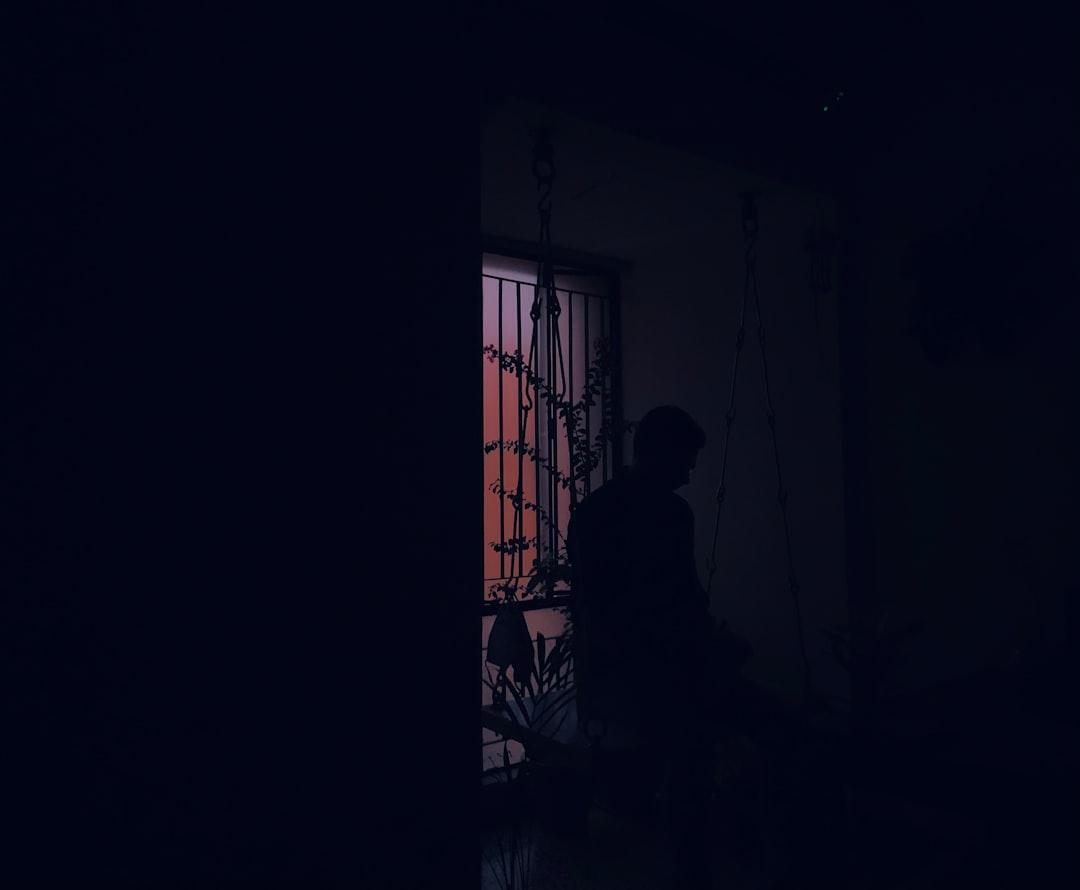
I made wudu. Prayed. And then I sat there in the dark living room, and instead of scrolling my phone, I opened the adhkar app. The morning adhkar. The same ones I'd been rushing through for years, sometimes skipping entirely.
That morning I actually read them.
And something shifted.
Most of us treat the morning and evening adhkar like a checklist
I think that's the honest truth. We treat these words like a spiritual to do list. Say this three times, say that seven times, move on. We rarely stop to ask: what am I actually saying? Why these specific words? Why did the Prophet, peace be upon him, teach us to begin and end every single day with these particular phrases?
When you slow down and look at what the morning and evening adhkar actually contain, you realize something. They are not random. They address the exact anxieties that follow every human being from the moment they open their eyes to the moment they close them: fear of the unknown, dependence on things we cannot control, forgetfulness of who is actually running this world, and the quiet terror that we might be living wrong without knowing it.
These are not just words. They are architecture. They build something inside you if you let them.
The one that resets your entire operating system
أَصْبَحْنَا وَأَصْبَحَ الْمُلْكُ لِلَّهِ، وَالْحَمْدُ لِلَّهِ، لاَ إِلٰهَ إِلاَّ اللَّهُ وَحْدَهُ لاَ شَرِيكَ لَهُ، لَهُ الْمُلْكُ وَلَهُ الْحَمْدُ وَهُوَ عَلَى كُلِّ شَيْءٍ قَدِيرٌ
Asbahna wa asbahal mulku lillah, walhamdulillah, la ilaha illallahu wahdahu la shareeka lah, lahul mulku wa lahul hamdu wa huwa 'ala kulli shay'in qadeer.
"We have entered the morning and the dominion belongs to Allah. All praise is for Allah. There is no god but Allah alone, with no partner. His is the dominion, His is the praise, and He has power over all things."
(Reported in Muslim, 2723)
In the evening version, you replace asbahna with amsayna (we have entered the evening).
Look at the first phrase. "We have entered the morning and the dominion belongs to Allah." You are not saying the morning belongs to you. You are not saying this day is yours to command. You are acknowledging, before you have done anything productive, before your first email or your first meeting, that sovereignty over the next twelve hours belongs entirely to someone else.
That rewires something. Because most of my anxiety comes from believing I'm supposed to control outcomes. And the first line of the morning adhkar gently takes that weight off my shoulders.
The one that terrifies me in the best way
اللَّهُمَّ بِكَ أَصْبَحْنَا وَبِكَ أَمْسَيْنَا وَبِكَ نَحْيَا وَبِكَ نَمُوتُ وَإِلَيْكَ النُّشُورُ
Allahumma bika asbahna wa bika amsayna, wa bika nahya wa bika namootu wa ilaykan nushoor.
"O Allah, by You we enter the morning, and by You we enter the evening. By You we live and by You we die, and to You is the resurrection."
(Reported by Abu Dawud, 5068; and Tirmidhi, 3391)
This one stops me cold. Every time.
"By You we live and by You we die." It's a total declaration of dependency. You are saying: the fact that I am breathing right now is by Your will. The fact that I will one day stop breathing is also by Your will. And after all of it, I'm coming back to You.
I think this is the dua that the Prophet, peace be upon him, gave us to cure the illusion of self sufficiency. We walk around all day thinking we are holding our lives together. This phrase says: no, you're not. He is.
There's a vulnerability in this dua that I find almost uncomfortable. You are admitting you don't even own your next breath. And yet saying it out loud, genuinely meaning it, doesn't make me feel small. It makes me feel held.
The one that works like armor
بِسْمِ اللَّهِ الَّذِي لَا يَضُرُّ مَعَ اسْمِهِ شَيْءٌ فِي الْأَرْضِ وَلَا فِي السَّمَاءِ وَهُوَ السَّمِيعُ الْعَلِيمُ
Bismillahil ladhi la yadurru ma'as mihi shay'un fil ardi wa la fis sama'i wa huwas samee'ul 'aleem.
"In the name of Allah, with whose name nothing on earth or in the heavens can cause harm, and He is the All Hearing, the All Knowing."
(Reported by Abu Dawud, 5088; and Tirmidhi, 3388. Recited three times in the morning and three times in the evening.)
Someone I know used to struggle badly with anxiety about their family's safety. They told me once that this was the dua that gave them enough calm to function. Not because it's a magic spell, but because of what it forces your heart to accept: if you are under Allah's name, under His awareness, then harm doesn't just randomly find you. Everything passes through His knowledge first.
Look at how it ends. As Samee ul Aleem. The All Hearing, the All Knowing. You're not just asking for protection. You are anchoring yourself to the fact that Allah hears everything and knows everything. He is not distant. He is not unaware. Your situation is fully seen.
Three times in the morning. Three times at night. It takes maybe thirty seconds. And yet on the mornings I skip it, I genuinely notice something missing. A kind of spiritual exposure I can't quite name.
The one that handles the thing you're most afraid to say out loud
اللَّهُمَّ إِنِّي أَعُوذُ بِكَ مِنَ الْهَمِّ وَالْحَزَنِ، وَأَعُوذُ بِكَ مِنَ الْعَجْزِ وَالْكَسَلِ، وَأَعُوذُ بِكَ مِنَ الْجُبْنِ وَالْبُخْلِ، وَأَعُوذُ بِكَ مِنْ غَلَبَةِ الدَّيْنِ وَقَهْرِ الرِّجَالِ
Allahumma inni a'udhu bika minal hammi wal hazan, wa a'udhu bika minal 'ajzi wal kasal, wa a'udhu bika minal jubni wal bukhl, wa a'udhu bika min ghalabatid dayni wa qahrir rijal.
"O Allah, I seek refuge in You from worry and grief, and I seek refuge in You from inability and laziness, and I seek refuge in You from cowardice and miserliness, and I seek refuge in You from being overcome by debt and the overpowering of people."
(Reported in Bukhari, 6369)
This dua is almost too honest. Read the pairs again. Worry and grief. That covers the future and the past. Inability and laziness. That covers what you genuinely cannot do and what you simply won't do. Cowardice and miserliness. Fear of acting and refusal to give. Debt and being overpowered by others.
The Prophet, peace be upon him, sought refuge from all of these. Every day.
That means it's normal to feel them. You are not broken for waking up anxious. You are not faithless for feeling stuck between grief over what happened and fear of what's coming. The very existence of this dua tells you: this is part of being human. And the solution isn't to pretend you're fine. The solution is to bring all of it before Allah.
I used to think spiritual strength meant not feeling these things. Now I think spiritual strength is feeling all of them and still turning to the only One who can actually do something about it.
Why the morning and evening specifically
There's a reason these adhkar sit at the two hinges of the day. The morning is when you face the unknown. The evening is when you process what just happened. Both are vulnerable moments. Both are thresholds.
Allah could have prescribed one long session of dhikr at noon. But He didn't. He placed these words at the exact points where your heart is most exposed: when you're about to step into uncertainty and when you're returning from it, tired and sometimes wounded.
That's not accidental.
The adhkar are not maintenance. They are medicine placed exactly where the wound opens.
What happens when you actually mean them
I won't claim I've been perfectly consistent. There have been weeks where I rushed through them in forty seconds and weeks where I skipped them entirely. But the mornings where I sat, said them slowly, let the Arabic settle in my chest before moving on to the next phrase, those mornings were different. Not because my problems disappeared. But because I walked into the day with my hands already open instead of clenched.
And maybe that's the whole point. These words don't change your circumstances. They change the posture of your heart before your circumstances arrive.
Every morning and every evening, Allah gave you a script for surrender, and most of us haven't read it yet.
Continue Your Journey
Explore more on SeekIslam: read your Daily Athkar to protect and ground yourself, use our Halal Finance Tools to invest with confidence, or browse All Articles for more reflections and guidance.


Share Your Reflection
Be the first to share a reflection on this article.