# The Spreadsheet That Made Me Realize I Had No Idea What I Was Actually Risking
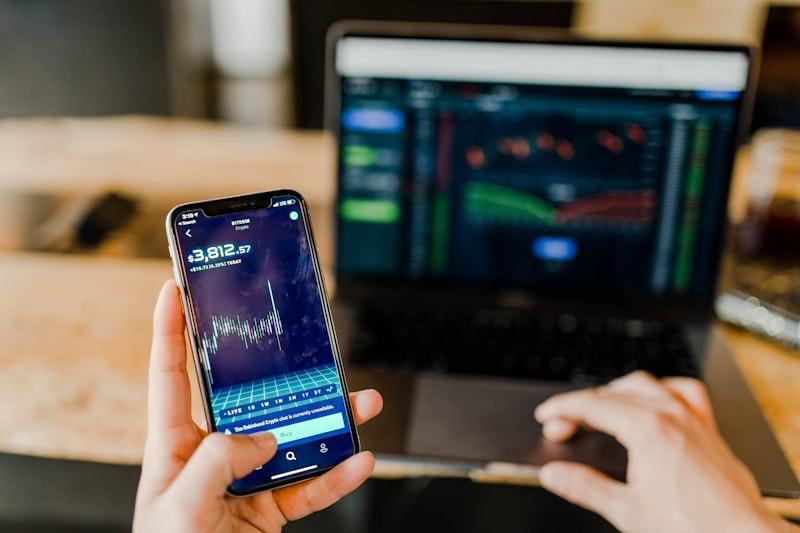
I built a spreadsheet last fall that I thought would make me feel better about my portfolio. Three columns: asset name, current value, and percentage allocation. Simple enough. I had some money in SPUS, some in HLAL, a little bit in individual stocks I'd screened myself, and a chunk sitting in a high yield savings account I was already uneasy about.
The spreadsheet was supposed to give me clarity. Instead it gave me a question I couldn't answer: what happens to all of this if something actually goes wrong?
Not theoretically. Not "the market dips 10% and recovers in six months." I mean what happens if I lose my job the same month the market drops 30%. What happens if I need $15,000 in three weeks for a family emergency and everything is locked in positions that are down. What happens if I'm so concentrated in US large cap equities that a single sector rotation wipes out a year of gains.
I realized I had spent months researching whether my investments were halal, and almost no time thinking about whether my overall approach to risk was sane.
Most Muslims I know treat "halal" as the only filter
And I get it. The shariah compliance question is the first gate. You have to walk through it before anything else matters. Is this stock screened? Does this fund hold debt heavy companies? Is there interest involved? Those are non negotiable questions.
But here's what I think a lot of us miss: a portfolio can be 100% halal and still be reckless.
You can put every dollar you have into a single halal stock and watch it crater. You can be fully invested in SPUS with zero cash reserves and get blindsided by a job loss. You can ignore concentration risk, ignore liquidity, ignore your own timeline, and still feel righteous because everything passed a shariah screen.
Halal is necessary. But halal is not a risk management strategy.
What the Quran actually says about not throwing yourself into destruction
There's a verse I keep coming back to. Allah says in Surah Al Baqarah, verse 195: "And spend in the way of Allah and do not throw yourselves into destruction. And do good; indeed, Allah loves the doers of good."
Most tafsir scholars note that "throwing yourselves into destruction" isn't limited to the battlefield context. It extends to any reckless behavior that needlessly endangers your wellbeing, your family's security, your ability to function.
I think about this verse when I see someone put 80% of their savings into a single halal stock because a brother on YouTube said it was about to moon. That's not investing. That's gambling with a halal label on it.
Risk management isn't just a finance concept. It's a form of tawakkul done right. You tie your camel and then you trust Allah. The tying part requires thought.
The specific risk most halal investors don't even know they're carrying
Here's something concrete. If you hold SPUS (the SP Funds S&P 500 Sharia Industry Exclusions ETF), you're holding a filtered version of the S&P 500. As of early 2024, that fund had significant concentration in technology and healthcare because many financial and conventional insurance companies get excluded by shariah screens. That's the nature of the filtering process.
So you end up with a portfolio that's more tech heavy than the broader S&P 500. Which means when tech sells off, you feel it harder than someone holding a conventional index fund.
I'm not saying don't hold SPUS. I hold it. But I think you should know what you actually own and what risks come baked in just because of the screening methodology.
HLAL (the Wahed FTSE USA Shariah ETF) has a similar dynamic. Shariah screening inherently tilts you toward certain sectors and away from others. Your diversification looks different than what a conventional investor experiences, and most people never sit down to examine what that means for their actual exposure.
If you had $30,000 in SPUS and $20,000 in HLAL, you might think you're diversified because you hold two different funds. But look at the overlap. Look at the top holdings. You might find you're doubling down on the same names.
A simple exercise that took me twenty minutes and changed how I thought about everything
I went through my portfolio and asked five questions. Not complicated ones. Just honest ones.
If I lost my income tomorrow, how many months could I survive without selling any investments? The answer, when I was honest, was about two and a half months. That number shook me.
What percentage of my invested money is in a single sector? For me it was over 40% in tech. Not because I chose to overweight tech, but because shariah screening naturally pushed me there.
Do I have any investment I couldn't sell within 48 hours if I needed cash? I had one. A private investment a community member had invited me into. Completely illiquid.
What's the maximum I could lose in a single month based on historical drawdowns of my holdings? I ran the numbers using 2022 as a reference. SPUS dropped roughly 20% that year. On my portfolio size at the time, that would have been about $9,400 in paper losses.
Am I okay with that number? When I sat with it honestly, the answer was: not if it happened while I was also dealing with a job loss or a medical bill.
Twenty minutes. That's all it took to realize my risk profile and my actual risk exposure were two completely different things.
The emergency fund isn't optional, it's the foundation
I know this sounds basic. But I talk to Muslims all the time who have $40,000 in brokerage accounts and $800 in their checking account. Brothers and sisters who can tell you the expense ratio of UMMA (the Wahed Dow Jones Islamic World ETF) down to the basis point but don't have three months of expenses set aside in accessible cash.
Your emergency fund is your first line of risk management. Before asset allocation. Before sector diversification. Before any of it.
The Prophet, peace be upon him, said: "Take advantage of five before five: your youth before your old age, your health before your sickness, your wealth before your poverty, your free time before your busyness, and your life before your death." (Reported by al Hakim, authenticated by al Albani.)
Your wealth before your poverty. That includes protecting what you have, not just growing it.
I think three to six months of living expenses in a halal savings vehicle is the minimum. And yes, finding a truly halal place to park cash is its own challenge. But the challenge doesn't excuse the neglect.
Diversification in a halal portfolio requires more intentionality
Because shariah screening removes entire sectors (conventional finance, alcohol, gambling, weapons, pork related industries, heavily leveraged companies), your universe of investable assets is already smaller. That's a fact, not a complaint.
But it means you have to work harder at diversification. You can't just buy one halal ETF and assume you're covered.
Consider geographic diversification. HLAL is US focused. UMMA gives you international exposure. SPRE (the SP Funds S&P Global REIT Sharia ETF) gives you real estate exposure within a shariah compliant framework. Combining these creates a meaningfully different risk profile than holding any one of them alone.
If you'd put $500 a month into SPUS alone starting January 2020, your returns would have been entirely dependent on US large cap shariah compliant equities. One geography. One market cap range. One screening methodology. That's not diversification. That's a bet.
Spreading that same $500 across SPUS, HLAL, and SPRE, even in rough proportions like 50/30/20, would have given you exposure to different asset classes, different geographies, and different risk factors.
The question underneath all of this
Risk management sounds like a technical exercise. And it is, partly. But underneath the spreadsheets and the allocation percentages, there's a deeper question that I think every Muslim investor needs to sit with.
Are you being a good steward of what Allah has given you, or are you just hoping it works out?
Because hope is not a strategy. And tawakkul without effort is just wishful thinking dressed in spiritual language.
I still look at that spreadsheet sometimes. It's better now. More balanced. More intentional. But the question it forced me to ask is the thing that actually mattered. Not what my returns were, but what I stood to lose, and whether I had done the quiet, unglamorous work of protecting what was already in my hands.
What would your spreadsheet tell you if you were honest with it?
I am not a certified financial advisor. This article reflects personal experience and general knowledge, not professional financial advice. Please consult a qualified advisor for your specific situation.
Continue Your Journey
Explore more on SeekIslam: read your Daily Athkar to protect and ground yourself, use our Halal Finance Tools to invest with confidence, or browse All Articles for more reflections and guidance.

Share Your Reflection
Be the first to share a reflection on this article.